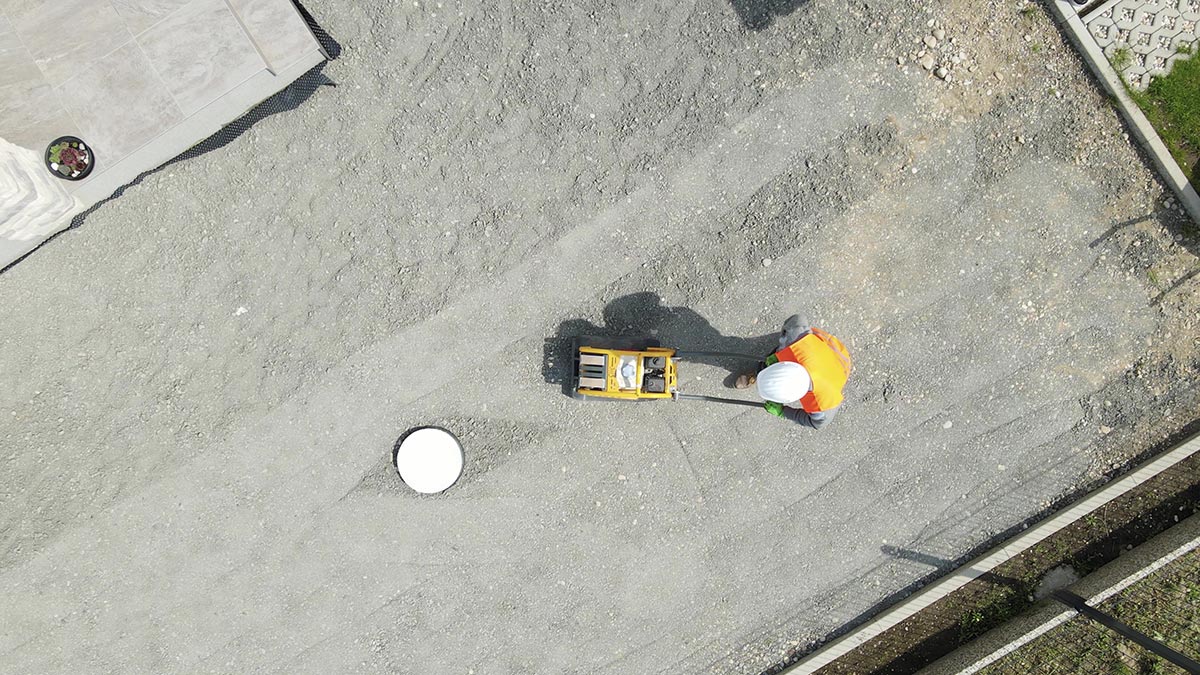
One of the first things I learned in construction is that the part of a job people see is not always the part that matters most. When a driveway or parking lot is finished, most people see a smooth, clean surface and think the job is done. They do not see the hours of preparation that happened underneath it.
That is understandable. If you are a homeowner, you probably are not thinking about the base material or drainage when you pull into your driveway. You want it to look good, feel solid, and last.
But after years of working in paving, I look at a finished surface differently. I know that what is underneath can determine whether that pavement is still performing well years from now or whether problems start showing up much sooner than anyone expected.
The Surface Is Only Part of the Job
There is something satisfying about seeing fresh asphalt go down. After all the preparation, equipment, materials, and coordination, you finally get to see the finished product take shape.
But I have learned not to let that moment fool me into thinking the surface is the whole job.
A good paved surface needs a stable foundation. If the ground underneath has not been prepared properly, the asphalt is being asked to do a job it was never meant to do on its own.
That is where experience matters. You start to understand that a smooth surface can hide problems for a while. Eventually, those problems tend to find their way back to the surface.
Preparation Takes Patience
The preparation stage is not always the most exciting part of a project. It can also be the part that creates the most questions from a customer.
Why does the job need this much excavation? Why are we spending time compacting the base? Why can we not just put the new asphalt over what is already there?
I understand those questions. If you cannot see the benefit immediately, it can be difficult to understand why the work matters.
Why the base matters
The base provides support for the pavement above it. If it is weak, uneven, or poorly compacted, the finished surface can eventually settle or crack.
There are times when shortcuts might appear to make sense. They could save labor or reduce the immediate cost of a project. But I always have to ask myself another question.
What happens six months or two years from now?
That is the question I try to keep in mind when making decisions on a job.
Water Can Change Everything
If there is one thing I have learned to respect in paving, it is water.
Water has a way of finding the weakest point. If drainage is not handled properly, water can collect around or underneath the pavement. Over time, that can weaken the supporting layers and contribute to cracking, settlement, and other problems.
Looking at the property as a whole
This is why I do not think of paving as simply putting a surface on the ground. You have to look at how water moves across the property.
Where does rainwater go? Is the ground properly graded? Are there areas where water will sit? Does the existing drainage need to be addressed before the paving work begins?
These questions may not be obvious to a homeowner looking at the finished driveway, but they can make a major difference in how that driveway performs.
Doing More Work Does Not Always Mean Charging More
There is sometimes a misconception that contractors recommend additional preparation simply to increase the cost of a project.
I cannot speak for every contractor, but that is not how I approach my work. If something needs to be addressed, I want the customer to understand why.
There are also times when a property does not require as much work as someone might expect. I think a good contractor should be able to explain both situations honestly.
The goal is not to do the most work possible. The goal is to do the right work.
That distinction matters.
The Tradeoff Between Cost and Long Term Value
Every construction project has a budget. I know that better than anyone. Customers have to make decisions based on what they can afford, and contractors have to manage costs carefully.
There is nothing wrong with looking for value.
The problem comes when saving money today creates a much larger expense later.
I have seen situations where a customer wanted to reduce the scope of work to keep the initial price down. Sometimes that is a reasonable decision. Other times, it means leaving a problem underneath the surface that will eventually need to be fixed.
Those are the conversations that require honesty.
I would rather explain the tradeoffs upfront than have someone call me later asking why their new pavement is already showing problems.
What Experience Teaches You
After enough years in construction, you start noticing things differently.
You see areas where water has been collecting. You recognize signs of an unstable base. You know that certain conditions require more attention than others.
That experience does not mean you are always right. There are still surprises on construction sites. Ground conditions can change. Weather can affect a project. Something hidden can appear once work begins.
That is part of the business.
What experience gives you is the ability to recognize potential problems earlier and make better decisions when they appear.
Taking Pride in What People Never See
For me, this is where craftsmanship comes into the picture.
Anyone can be proud of a finished surface when it looks brand new. The real test is whether you can be proud of the work underneath it.
As George Joseph Stanley, I have always believed that my name is connected to every project my company completes. I may not be there years later when a homeowner looks at their driveway, but I want to know that we gave that project the best foundation we could.
That means caring about work that the customer may never actually see.
Final Thoughts
The strongest part of a paved surface is often the part nobody notices.
The grading, drainage, base preparation, compaction, and other preparation work are easy to overlook because they disappear once the project is finished. But those details are what help determine whether the pavement can withstand weather, traffic, and time.
I have learned not to judge a paving job only by how it looks on the day it is completed. The better question is how it will look years from now.
That is what good construction should be about.
The goal is not simply to leave behind a smooth surface. It is to build something with a foundation strong enough to last. And sometimes the most important work we do is the work that nobody ever gets to see.